
Dublin Genealogy Tours
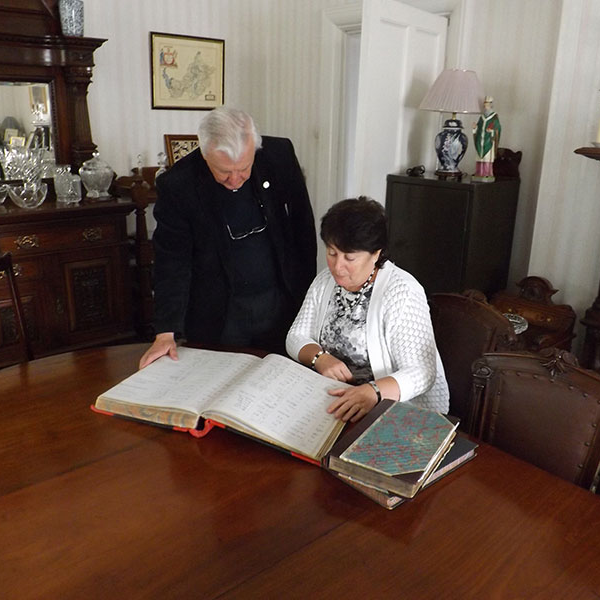
My Ireland Heritage find your Ancestors and exact house location from the 1700’s to the late 1800’s, and all available records in Ireland. We are an Irish family business dedicated to assisting you in your Irish Genealogy research for your roots and records of your family history of past generations in Dublin, as well as providing you with a once in a lifetime Irish Genealogy tour experience to visit your families original family house and Walk in the Footsteps of your Irish Ancestors.
Sean and the Team at My Ireland Heritage are a Government certified & approved Genealogy & Touring Company, and will personally guide you on the journey into your Irish ancestry to any County in Ireland.
Many companies are genealogy research only, many companies are touring companies only, we at My Ireland Family Heritage are proud to be able to encompass your research and tour together enabling us to work with you throughout the process to customize your tour with you and for you. To achieve a full genealogy tour experience consider adding one of our one-day historical tours.

Our Tours
Our Ancestral Townland Experience Tours
County Dublin is unusual among Irish counties for genealogy research: it’s compact in area but was, even in the 1800s, home to a large and highly mobile population, with families arriving from every corner of Ireland to work in the city before some moved on again to emigrate. That mobility can make Dublin roots trickier to pin down than a rural county, since a family recorded in a Dublin parish register may only have lived there a generation or two before or after arriving from elsewhere.
Dublin is also where Ireland’s principal genealogical archives and record repositories are based, which makes it a natural hub for research even when your family’s true roots lie in another county entirely. For families with genuine Dublin ancestry, we work through parish, workhouse and city directory records to establish exactly where in the city or its surrounding villages your ancestors lived, since “Dublin” on an old document could mean anywhere from the city centre to what were once outlying rural parishes.
A Dublin-based tour can combine archive research with a walk through the historic streets, docks or outlying villages connected to your family, offering both the practical benefit of the city’s records and a genuine sense of place for Dublin-rooted families.
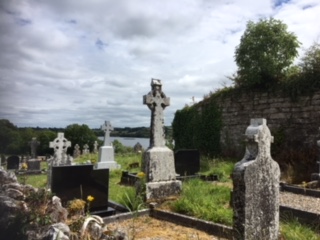
- Dublin has 8 Baronies
- Dublin has 84 Civil Parishes
- Dublin has 319 Electoral Divisions
- Dublin has 1049 townlands
- Dublin has 11 sub townlands
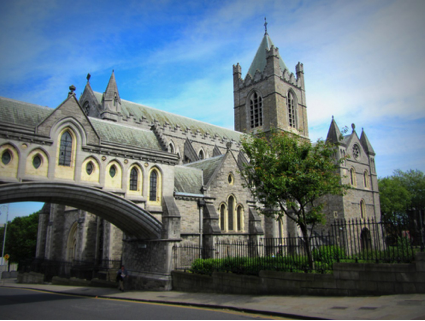
Positioned on Dublin’s Wine Tavern Street the oldest street in Dublin and site of the Original Viking settlement 841 AD the iconic Christchurch Cathedral.
There has been a church on this site since the coming of the Normans 12th Century. Handles Messiah was first performed here and it holds in its Crypt the Body of Richard De Clare (Strongbow) first Norman to arrive in Ireland 1169 AD. The name Dublin comes from the Gaelic word Dubhlinn, meaning black pool where two rivers meet the Liffey and the Poddle the water becomes Black. Old Norse name for Dublin was Dyflin, those without knowledge of Irish omitted the dot, spelling the name as Dublin.
It is now thought that the Viking settlement 841AD was preceded by a Christian ecclesiastical settlement known as Duibhlinn, from which Dyflin took its name. Beginning in the 9th and 10th century, there were two settlements where the modern city stands. The Viking settlement known as Dyflin and a Gaelic settlement, Áth Cliath (“ford of hurdles”) was further up river, at the present day Father Mathew Bridge at the bottom of Church Street. Áth Cliath is a place name referring to a fording point of the River Liffey near Father Mathew Bridge. The Castle of King John was built in Dublin in 1206 and some walls still remain. (see Dublin City Tour)
Family Dynasties 1500-1600 AD
- Irish – None
- Norman – Barnwell, Birmingham, De Lacey, Power, White
- Scottish – None
- Viking – Harold
Georgian Dublin
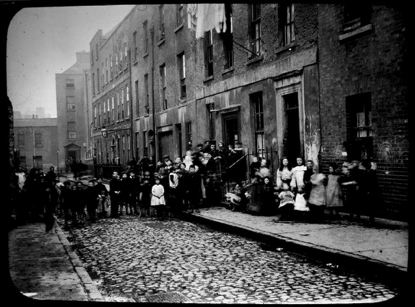
Once the second city of the British Empire Georgian Dublin built between 1717 and 1830 for King George the 1st, 2nd, 3rd & 4th became the worst slums of Europe after the Great Famine of 1845-51.
Visit the Famine ship Jeannie Johnson or see how life was lived in the Tenements during the 1800s.
Dublin- Things to do and may be possible to include within your Ancestral Townland Experience Tour
- Irelands Ancient East
- The Georgian Dublin experience 1717 -1830 and the relevance of this area to the Famine 1845-1850
- Customs House 1791
- Leinster House 1745 (Government Buildings)
- Duke of Wellington memorial
- Kilmainham Jail 1796
- Phoenix Park; location of Houses of the American Ambassador and the President of Ireland
- Guinness Brewery
- Book of Kells
- Jeanie Johnston Famine ship replica 1845-1850
- Famine Memorial departing Area
- Tenement Living Post Famine period
- St Patrick Cathedral
- Christ Church & Dublin Castle
Frequently Asked Questions
My ancestors are listed as being from "Dublin", could that mean somewhere other than the city centre?
Yes, very often. Many parts of what’s now Dublin city and county were once separate rural villages, and we work to establish exactly which parish or townland your family actually came from.
Is Dublin a good base for researching ancestors from other counties too?
Yes, Dublin holds many of Ireland’s key genealogical archives, so it’s often a practical starting point for research even when your family’s roots lie elsewhere in Ireland.
Can a Dublin tour include a visit to the national archives alongside a family history walk?
Yes, we regularly combine archive visits with walking tours of areas connected to a family’s history in the city.