


For many people researching Irish family history, the idea of standing where ancestors once lived feels deeply meaningful. Visiting an original Irish homestead can be one of the most emotional moments in a genealogy journey—but it’s also one that benefits from realistic expectations.
Time, migration, and land changes mean that ancestral homes are not always grand houses preserved in perfect condition. More often, what remains are subtle traces: ruins, field boundaries, lanes, and community landmarks that quietly carry centuries of memory. Understanding what you can still see helps transform disappointment into discovery.
What an “Original Irish Homestead” Really Means
In Irish genealogy, a homestead usually refers to the land your ancestors occupied rather than a single surviving building. Most Irish families lived on small farms, rented holdings, or clustered townlands rather than owning large estates.
An original Irish homestead may include:
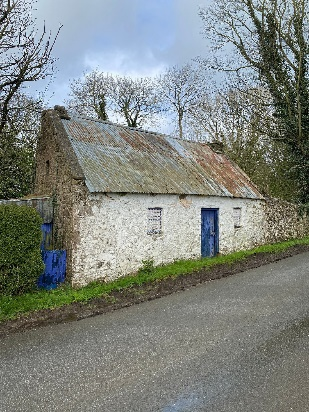
- Stone cottage ruins or foundations
- Old farm walls or hedgerows
- Traditional field layouts
- Lanes, wells, or boundary markers
Even when the house itself is gone, the land often remains recognisable through historical maps and local knowledge.
Why Many Homesteads No Longer Stand
Ireland’s rural landscape has changed dramatically over the last two centuries. Emigration, famine, consolidation of farms, and modern development all contributed to the disappearance of many dwellings.
In counties heavily affected by the Potato Famine, entire townlands were abandoned. For example, families researching Donegal family history or County Mayo genealogy often encounter areas where multiple homes once stood, but only traces remain today.
This doesn’t mean your search has failed—it means your ancestors’ lives were shaped by forces that are still visible in the land itself.

Ruins: Powerful, Even When Modest
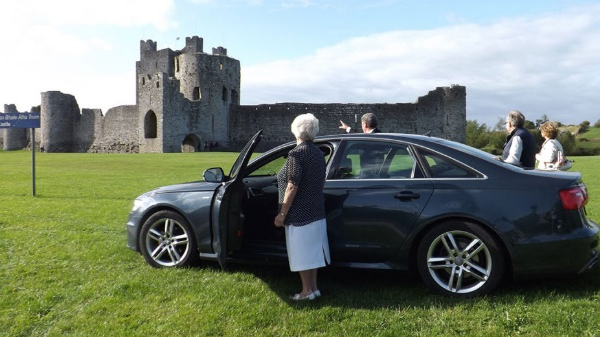
Many visitors are surprised by how small ancestral ruins can be. A collapsed stone wall or partial foundation may be all that remains, yet these sites often feel incredibly powerful.
Standing at a ruin allows you to imagine daily life: cooking fires, livestock, family routines, and the moment when someone decided to leave. In places linked to County Clare genealogy, visitors often find scattered remains integrated into modern farmland, quietly preserved through continued use of the land.
These moments are not about spectacle—they are about connection.
Farm Boundaries and Townland Layouts
One of the most consistent features you can still see when visiting ancestral land is field structure. Stone walls, ditches, and hedges often follow boundaries laid out generations ago.
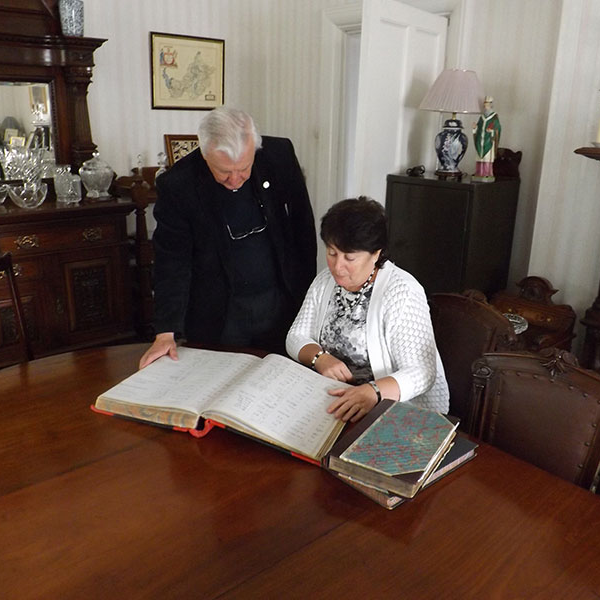
Historic valuation maps and estate records help identify these layouts. Once on the ground, you may recognise:
- Narrow, elongated fields
- Clustered plots near shared lanes
- Natural features used as boundaries
These elements are especially valuable when the house is gone, as they still reflect how your ancestors interacted with the land.

Community Landmarks That Still Anchor Memory
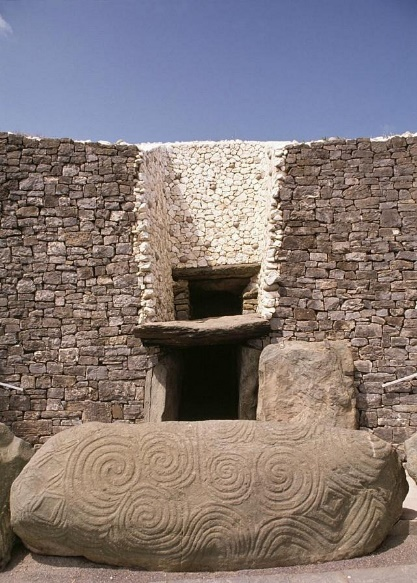
Even when private homes have disappeared, community landmarks often survive. Churches, graveyards, schools, and crossroads remain central to understanding ancestral life.
Visitors researching County Meath genealogy frequently find parish churches that still serve the same communities their ancestors attended. Graveyards, in particular, can offer powerful confirmation of place, even when headstones are worn or unmarked.
These shared spaces remind us that ancestry is not just about individual homes, but about belonging to a wider community.
Talking to Locals: An Overlooked Resource
One of the most meaningful parts of visiting ancestral homesteads is engaging with local people. Farmers, neighbours, and local historians often know townland histories that never made it into written records.
For families tracing their Irish roots, conversations can reveal:
- Old house names no longer on maps
- Nicknames tied to family lines
- Stories passed down through generations
These insights often fill gaps that documents alone cannot.
Managing Expectations, Preserving Meaning
It’s natural to hope for a clear, intact family home. However, the true value of visiting an ancestral homestead lies in understanding context rather than finding perfection.
What you see today represents survival, loss, resilience, and continuity. A quiet field can tell as much of a story as a standing house—sometimes more.
By approaching visits with realistic expectations, you allow space for reflection rather than disappointment.
The Role of Research Before You Visit
Accurate research is essential before setting foot on ancestral land. Ireland’s townlands, parishes, and counties often overlap in ways that confuse even experienced researchers.
Professional Irish genealogy research ensures that the land you visit genuinely connects to your family story. This is especially important in regions requiring specialised Northern Ireland genealogy research, where records and boundaries differ significantly.
Research transforms visits from guesswork into meaningful encounters.

Let Us Guide You to What Still Remains
At My Ireland Family Heritage, we help families discover and visit their original Irish homestead with clarity and respect for what time has changed. Through expert genealogy services in Ireland, we identify ancestral land, interpret what still exists, and design heritage visits rooted in real history.
We work across all 32 counties of Ireland, offering both Irish genealogy research and personalised heritage touring, including specialist Northern Ireland genealogy support. Together, we help you see what remains, understand what’s been lost, and connect deeply with the land that shaped your family.
Get in touch with us today and let us guide you beyond expectations and into meaning—because even when walls fall, heritage endures.